Showing posts with label pre. Show all posts
Showing posts with label pre. Show all posts
Saturday, April 30, 2016
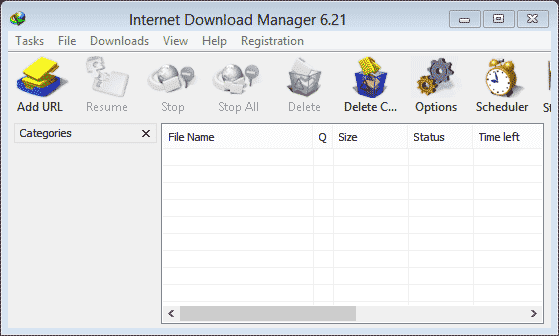
IDM 6 21 Portable Pre Cracked !!

Today Im gonna share IDM 6.21 (Portable). You dont need any serial key or crack to run it. Its only 6.24 MB. Even you dont need to install it. All you need is just to download and unzip the folder. And your IDM is ready to serve you!
Couple of weeks ago, I shared IDM 7.2 Portable. But it has some features disabled. But this IDM 6.21 has all features enabled. And its pre activated!
As I always said, IDM is a very easy to use download manager. Its the most trusted downloader all over the world. Follow the instruction below:
- Download IDM 6.21 from this link. (Its completely free of spam, virus or ads)
- Its a zipped folder - unzip it first.
- Now open the folder and double click on IDMan.exe to run IDM.
- Now start downloading!
This version also contains a tutorial. If you need any tips, directly go to the Help menu and choose tutorial to view tips.
Customizing the Settings
If you need to adjust the settings, simply hit on the options button. From here you can customize the IDM settings.
- General - Browser/ System Integration
- Save to - Set save location
- Download - Default download settings
- Connection - Set connection type
There is nothing more to say about IDM. If you face any problem, please inform me . . .
Stay with Marks PC Solution to get more interesting IT topics!


Thursday, January 21, 2016
Does Your Pre Workout Inhibit Fat Loss Study Shows Nitrate Supplements Decrease Metabolic Rate By 4 2
 |
| If you want other to see your pump, you got to be ripped. If not, why care about reductions in BMR? |
The bad thing: Arginine didnt work. The good thing: This means it didnt decrease your BMR, either
Against that background its quite astonishing that arginine and citrulline based pre-workout products have dominated the top-seller lists of the big supplement vendors for decades. A fact thats probably partly due to other potential benefits of these amino acids, of which one - you as a SuppVersity reader know that - could be fat loss | learn more about the potential fat loss effects.
On a side note: I am pretty sure the fact that the other potential benefit is an increase in sexual stamina didnt hamper the sales either (Neuzillet, 2013; Hotta. 2014 ;-)
With more and more people openly declaring that they would no longer waste money on "good tasting, but expensive and disfunctional products", they industry was yet pressed to develop alternatives. Luckily, our body has two options it can chose from, when producing nitric oxide.Fortunately, the industry has developed better alternatives...?
You know option #1, the arginine ? nitric oxide pathway, and - with all the hype and hyperbole that surrounded the introduction of the first nitrate supplements - I am pretty sure, you know the other one as well, the nitrate-nitrite ? nitric oxide pathway
 |
| Figure 1: The Arginine- and the Nitrate-Nitrite - NO pathway are the yin and yan of nitric oxide production (Lundberg. 2008). |
With the "yan", i.e. the nitrate-nitrite ? nitric oxide pathway being a relatively "new kid on the NO block", that recycles (=reduces) inorganic anions nitrate and nitrite to form bioactive NO in blood and tissues during physiological hypoxia.
It goes without saying that there is a bottle neck to this process as well, but the rate limiting availablility of oxygen which hampers the argine-based NO generation by NOS becomes limited as oxygen levels fall is actually a signal for the nitrate–nitrite ? nitric oxide to really kick in.
There is more yin and yan, here
If you take a closer look at the results of a study in the America Journal of Clinical Nutrition (Figure 2), you will yet have to realize that there is "more yin and yan", here than youd probably hope for. According to the data scientists from the venerable Karolinska Institutet in Stockholm, Sweden, present in their paper, "[d]ietary inorganic nitrate reduces the RMR." (Larsen. 2014)
 |
| Figure 2: VO2 consumption (marker of fatty acid oxidation) and basal metabolic rate (BMR) relative to means (left), thyroid hormone (T3, T4) levels after 3-d dietary intervention with sodium nitrate (Larsen. 2014) |
Interestingly, these effects were not - as you may have been speculated - brought about by changes in thyroid hormone status. And the subjects insulin sensitivity, glucose uptake, plasma concentration of isoprostanes, as well as their total antioxidant capacity were unaffected, as well.
 |
| Suppversity Suggested Read: " The Beat Your Personal Bests W/ Beets 101: How Much? 8.4 mmol Nitrate ~400-1300g Beets! When? 2.5h Pre Workout!" | read more |
The way things are, I will refrain from ranting and rather suggest you simply skip the supps and consume the spinach, beetroot, lettuce and other high nitrate veggies right away. Most of the human studies which support the ergogenic potential of nitrates have been conducted with beetroot juice instead of capped sodium-nitrate.
And lets be honest, the weight loss advantage of having green and not so green nitrate containing vegetables in your is eventually beyond doubt. So, if there was a similar reduction in RMR from your daily serving of spinach, you can be more or less certain that it was compensated by the beneficial weight loss effects of the whole spectrum of nutrients thats present in this edible flowering plant in the family of Amaranthacea.
- Bailey, Stephen J., et al. "Dietary nitrate supplementation reduces the O2 cost of low-intensity exercise and enhances tolerance to high-intensity exercise in humans." Journal of Applied Physiology 107.4 (2009): 1144-1155.
- Hotta, Yuji, et al. "Oral l?citrulline supplementation improves erectile function and penile structure in castrated rats." International Journal of Urology (2014).
- Larsen, Filip J., et al. "Dietary inorganic nitrate improves mitochondrial efficiency in humans." Cell metabolism 13.2 (2011): 149-159.
- Lundberg, Jon O., Eddie Weitzberg, and Mark T. Gladwin. "The nitrate–nitrite–nitric oxide pathway in physiology and therapeutics." Nature Reviews Drug Discovery 7.2 (2008): 156-167.
- Neuzillet, Y., et al. "A randomized, double?blind, crossover, placebo?controlled comparative clinical trial of arginine aspartate plus adenosine monophosphate for the intermittent treatment of male erectile dysfunction." Andrology 1.2 (2013): 223-228.
Saturday, January 16, 2016
18 Increased Protein Breakdown W 20g of Egg Protein Before Workout Reason Enough for Avoiding Pre Workout Protein Supps Rational Experimental Counter Evidence
 |
| Protein before workouts "accelerates protein catabolism"? That sounds worse than it actually is (photo BSN). |
But is it actually possible that consuming more protein (albeit at the wrong time) will have a negative impact on your gains?
You can learn more about protein intake at the SuppVersity

Are You Protein Wheysting?

5x More Than the FDA Allows!

Protein requ. of athletes

High EAA protein for fat loss

Fast vs. slow protein

Less Fat, More Muscle!
 |
| Figure 1: Graphical overview of the experimental protocol (Hasegawa. 2014) |
"Each testing period began on Day-1 and ended the meat-free diet consisting of grains, beans, and milk, and 24- hour urine sample collection on Day-8 (Figure 1). Participants were allocated into one of three groups; egg white protein (E), soy protein (S), and mineral water control (C) group with no additive, and all were carried out this study protocol three times, and asked not to change their lifestyle behaviors." (Hasegawa. 2014).
 |
| The result of this study should remind you of the "Protein-Wheysting" Article | more is not always better! |
- 20 g of egg protein,
- 20g of soy protein, or
- an isoenergetic placebo without protein
The exercises were performed for three sets of 10 repetitions at ~80% of a predetermined 1-RM with one min rest between sets and two minutes between each exercise.
 |
| Figure 2: no significant difference in perceived fatique, but a significant reduction in peak muscle soreness in the soy (grey blocks) vs. the control (white triangles) group (Hasegawa. 2014). |
How is that possible? Increased protein breakdown and reduced muscle soreness?
So, here we are with an obvious contradiction between the reduced muscle soreness (Figure 2) and the scientists claim that "pre-exercise protein supplementation taken in excess may accelerate protein catabolism" (Hasegawa. 2014)... you already guessed it: The contradiction depends on the false assumption that "protein catabolism" means "catabolism of muscle protein", which is not generally the case and in this specific case certainly wrong.
 |
| Figure 3: Urinary nitrogen excretion measured for 72h after the workout (Hasegawa. 2014) |
"So youre saying we dont have to worry?" Basically this is the message of todays SuppVersity article, yes. The notion that the increased amount of nitrogen the scientists measured in their subjects urine is the end product of muscle protein breakdown is highly questionable. Its more likely that the provision of extra protein makes the initiation of protein sparing mechanisms which would otherwise reduce the nitrogen excretion in the control group superfluous - I mean, look at Figure 3 again: Compared to Day 4 (i.e. baseline before workout), the levels remain stable in both protein supplementation groups.
You still have doubts!? Well, I have evidence to support my conclusion. Wycherley et al. (2010), for example, were able to show that their dieting subjects saw the same improvements in body composition no matter whether they consumed their protein + carbohydrate beverage (likewise 20g of protein) before or after their resistance training workouts. Rasmussen et al. (2000) report significant increases in muscle protein anabolism after resistance training with pre-workout EAA supplementation. And a protein + carbohydrate supplement reduced (not increased) the muscle damage (as evidenced by 33% reduced increase in myoglobin) in some, but not all subjects in a resistance training study by Baty et al. (7 free weight ex; 3 sets x8 reps to failure | Baty. 2007).
All in all, it does therefore not appear to be indicated to change your current supplementation practice (if you are consuming protein before your workouts)... well, unless you feel wiped out, whenever you consume protein before your workout. In that case, the protein induced increase in insulin is probably sending you right down the hypoglycemia alley. In view of given negative effects on your exercise performance and the touted increases in obesity risk, this is something you should try to avoid by either buffering the insulin spike with carbs or simply avoiding the ingestion of fast digesting protein supplements before your workouts | Comment on Facebook!
References:  |
| If your pre-workout protein makes you hypo, stop using it or buffer the drop in blood sugar w/ CHO | learn why |
All in all, it does therefore not appear to be indicated to change your current supplementation practice (if you are consuming protein before your workouts)... well, unless you feel wiped out, whenever you consume protein before your workout. In that case, the protein induced increase in insulin is probably sending you right down the hypoglycemia alley. In view of given negative effects on your exercise performance and the touted increases in obesity risk, this is something you should try to avoid by either buffering the insulin spike with carbs or simply avoiding the ingestion of fast digesting protein supplements before your workouts | Comment on Facebook!
- Baty, Jacob J., et al. "The effect of a carbohydrate and protein supplement on resistance exercise performance, hormonal response, and muscle damage." The Journal of Strength & Conditioning Research 21.2 (2007): 321-329.
- Hasegawa, Yuko, et al. "Effect of Egg White Protein Supplementation Prior to Acute Resistance Training on Muscle Damage Indices in Untrained Japanese Men." Monten. J. Sports Sci. Med. 3 (2014) 2: 5–12.
- Rasmussen, Blake B., et al. "An oral essential amino acid-carbohydrate supplement enhances muscle protein anabolism after resistance exercise." Journal of Applied Physiology 88.2 (2000): 386-392.
- Wycherley, Thomas Philip, et al. "Timing of protein ingestion relative to resistance exercise training does not influence body composition, energy expenditure, glycaemic control or cardiometabolic risk factors in a hypocaloric, high protein diet in patients with type 2 diabetes." Diabetes, Obesity and Metabolism 12.12 (2010): 1097-1105.
Subscribe to:
Posts (Atom)
