Showing posts with label endurance. Show all posts
Showing posts with label endurance. Show all posts
Monday, April 25, 2016
Endurance Training ? Overtraining Muscle Loss Run to Exhaustion Sympathetic Medium Intensity Steady State Parasympathetic HIIT Like Training No Overtraining
 |
| HIIT-like 400m sprinting is exhausting, but unlike running to exhaustion and medium intensity steady state cardio its not going to mess up your nervous system. |
Speaking of overtraining: As a SuppVersity reader you should actually be aware of the fact that scientists distinguish two different types of overtraining: Sympathetic and parasympathetic overtraining
You can learn more about HIIT, which appears to be less overtraining prone than MISS.

Never Train To Burn Calories!

Tabata = 14.2kcal /min ? Fat Loss

30s Intervals + 2:1 Work/Rec.

Making HIIT a Hit Part I/II

Making HIIT a Hit Part II/II

Triple Your Energy Exp.
 |
| Figure 1: Overview of the symptoms of the two major forms of overtraining. |

4 times a week running at 100% of their maximal heart rate until they were exhausted (utmost intensity group)
There is such a thing as overtraining, folks | read more
- 30 minutes of running four times per week (moderate intensity group)
- 3 - 5x 1200 m runs per day with a 5-min break every 400 m four times per week (high intensity group)
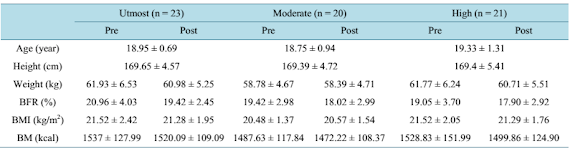 |
| Table 1: Characteristics of study groups at pre and post | Data are means XS± . Pre, pretraining; post, at the end of 8-week training; mid, at the end of 4-week training. Utmost, utmost intensity endurance training; moderate, moderate intensity endurance training; high, high intensity endurance training (Tian. 2014) |

If you have no idea what I am talking about, I suggest you take another look at my June 2012 article "Are You Still Burning Calories or Already Losing Fat? Study Shows: 5x15 Min HIIT Reduce Body Fat & Improve Fitness Twice as Effectively as 5x40min of Classic Cardio" (learn more) after youve finished this article.
- Heart rate variability (HRV): No significant changes in HRV parameters were found in all groups at pre and mid. But at post, the moderate intensity group showed more significant increases in RMSSD, PNN50, HF, LF and SDNN (P < 0.05 or 0.01) and much greater reduction in LF/HF than the other two groups (P was 0.033, 0.037 respectively). HFn of the moderate intensity group was significantly higher than that of the utmost intensity group (P = 0.012), while the opposite pattern occurred in LFn and LF/HF of the two groups (P was 0.025, 0.015 respectively).
As you would expect the changes in HRV in the moderate and utmost intensity group reflect increases in parasympathetic and sympathetic nervous system activity, respectively. - Circadian Changes in Cold Pressor Test (CPT): From pre to post marked differences were not found in SBP and DBP of all groups and their increases. At post HR was much less increased in utmost intensity group during CPT than the other two groups (average P < 0.05).
Next to a high basal heart rate an inhibited increase in heart rate is another characteristic of later stages of sympathetic overtraining. - Plasma catecholamine (NE & EPI): Norepinephrine (NE) concentration was considerably lower in utmost intensity group than the other two groups (P was 0.001, 0.00 respectively). At post marked inter-group differences were still not found in plasma PEI concentration.
A reduced catecholamine release is a classic characteristic of long(-er) term sympathetic overtraining - a phenomenon, some people may call "adrenal fatique" that occurs after an initial phase of catecholamine overproduction in sympathetic overtraining.
For the utmost intensity group, on the other hand, the scientists diagnosed an "over-excited SN [sympathetic nervous system]" (Tian. 2014), which is in contrast to the medium intensity and high intensity group, where the head-up tilt test did not indicate an "impairing effect on autonomic regulation" (Tian. 2014).
What about muscle loss? Oh, yes! I almost forgot that scientists from the University of the Witwatersrand (Oost- huyse. 2014) in South Africa have recently been able to show that 3 h of race- simulated cycling on 4 consecutive days may improve the cyclists ability to tap into their fat stores as an energy reserve. Unfortuna- tely, it will also lead to a 28-46% greater reliance on endogenous protein catabolism during exercise on day 2-4.
Bottom line: A least in the study at hand, the intense, albeit better short bouts of high intensity exercise in the HIIT-like high intensity group of the study at hand turn out to be the least overtraining prone type of aerobic activity.Now, every SuppVersity reader knows that protein catabolism doesnt necessarily translate ot "muscle loss", but for the average 10h of cardio + 20% energy deficit "dieter", it could.
Even the classic medium-intensity cardio training appears to be more overtraining-prone, due to the comparatively long duration and the subsequent increase in parasympathetic nervous system activity. If youre looking for a "side-effect free" cardio regimen, 3-5x intervals of 3x400m sprints could be a good way to incorporate cardio training into your exercise routine.
One thing we should keep in mind, though, is that someone who is sympathetically overtraining in the gym with all its negative consequences (see Figure 1) would probably be better of with classic "moderate intensity cardio" to bring up the parasympathetic tone and avoid "weight lifting induced" sympathetic dominance | Comment on Facebook!
- Myslivecek, P.R., Brown, C.A. and Wolfe, L.A. (2002) Effects of Physical Conditioning on Cardiac Autonomic Function in Healthy Middle-Aged Women. Canadian Journal of Applied Physiology, 27, 1-18.
- Oosthuyse, T., & Avidon, I. (2014). Changes in substrate utilisation and protein catabolism during multiday cycling in well-trained cyclists. Journal of Sports Sciences, (ahead-of-print), 1-11.
- Pichot, V., Busso, T., Roche, F., Garet, M., Costes, F., Duverney, D., Lacour, J.R. and Barthélémy, J.C. (2002) Autonomic Adaptations to Intensive and Overload Training Periods: A Laboratory Study. Medicine & Science in Sports & Exercise, 34, 1660-1066.
- Tian, Kaixin, et al. "Effect of Endurance Training on the Autonomic Nervous System Function of Young Male." International Journal of Clinical Medicine 5.19 (2014): 1189.
- Yamamoto, K., Miyachi, M., Saitoh, T., Yoshioka, A. and Onodera, S. (2001) Effects of Endurance Training on Resting and Post-Exercise Cardiac Autonomic Control. Medicine & Science in Sports & Exercise, 33, 1496-1502.


Wednesday, March 16, 2016
Performance Enhancing Gut Microbes First Study to Show Having The Right Gut Bugs Doubles Exercise Endurance
 |
| Yogurt & Co are good for athletes. But is this due to the bacteria? |
In said study which is still available only as an accepted manuscript, Hsu et al. investigated the association of intestinal bacteria and exercise performance in specific pathogen-free (SPF), germ-free (GF), and Bacteroides fragilis (BF) gnotobiotic mice (animals in which only certain known strains of bacteria and other microorganisms are present).
You can learn more about the gut & your health at the SuppVersity

Bugs Dictate What You Crave

Sweeteners & Your Gut

Foods, Not Ma- cros for the Gut

Lactulose For Gut & Health

Probiotics Dont Cut Body Fat

The Macrobiotic MaPi2.0 Diet
 |
| Figure 1: Time to exhaustion during exercise test and body composition of the miceaccording to the make-up of their gut microbiome; data expressed relative to group means (Hsu. 2014) |
Do we have human data, as well? No, we dont have human data thats comparable to the one presented in the study at hand, but we do have evidence of beneficial (ergogenic) effects of probiotics and prebiotics in human "athletes". Examples? Well, the oral administration of the probiotic Lactobacillus fermentum VRI-003 and mucosal immunity in endurance athletes (Cox. 2010). Improved oxidative status in athletes during intense exercise training (Martarelli. 2011). Reduced risk of infection (Gleeson. 2011; West. 2011). And if thats not enough, what about keeping on top of your game by preventing and managing travellers’ diarrhoea (Tillett. 2006)!
As any SuppVersity veteran would expect, the germ-free mice were leaner than the rest of the pack. At the same time, the "sterile" mice did yet also have a lower liver, muscle, brown adipose, and epididymal fat pad weight than the SPF and BF mice. |
| Figure 2: Selected markers of antioxidant status in serum and liver; expr. rel. to group means (Hsu. 2014) |
Pre- instead of probiotics: Personally, I believe that prebiotics, i.e. substances that promote the growth of the "right" bacteria are more promising agents than probiotics ("live" bacteria). Studies have shown that prebiotic at dosages above 2.5 g, which is far higher than that occurring in natural foods, increases the abundance of lactic acid and butyrate-producing bacteria. In that, galacto-oligo- saccharides (GOS) and fructo-oligo- saccharides (FOS), are the prebiotics with the most positive outcomes.
So what are the practical implications, then? As the authors emphasize, "[t]his is the first study to show that the intestinal microflora plays an important role in exercise performance." The way the microbial make-up regulates the antioxidant enzyme defense system is yet not in line with the observed reduction in physical fatigue Hsu et al. observed in the study at hand.As West points out in a 2012 mini-review as part of the BJSM "A–Z of nutritional supplements" series, the "potential benefits of supplementation with prebiotics on athletic performance are most likely indirect: they may be associated with the maintenance of gut health and perhaps a reduced risk of some illnesses which might enhance the athlete’s ability to train and compete." (West in DiMarco. 2012). Altering GI microbiota through the use of prebiotics may yet also favourably influence host metabolism. Athletes who are dieting, for example, will benefit from the reduction in appetite increase in gut peptide concentration in response to thec consumption of 16 g per day of FOS (Cani. 2009).
In view of the fact that the general assumption is that " intensive and sustained exercise training and high-level competition generate large amounts of free radicals that likely exceed the buffering capacity of the biological system, leaving athletes susceptible to oxidative stress", you would expect the Bacteriodes fragilis mice to perform the worst.
On the other hand, the mice harboring Bacteroides fragilis are significantly more muscular than the lightweight germfree mice... well, we could continue this discussion forever, but eventually the one result that may have a practical implication is the increased performance after mono-colonization in the germ-free mice. If nothing else, this result which happens to be the first evidence of performance enhancing effects of having a gut microbiome, would imply that you better recolonize your gut as soon as possible after a course of antibiotics. How the various different microbial status might regulate performance, on the other hand, will have to be elucidated in future studies - human (!) studies, that is | Comment on Facebook!
- Bäckhed, Fredrik, et al. "Mechanisms underlying the resistance to diet-induced obesity in germ-free mice." Proceedings of the National Academy of Sciences 104.3 (2007): 979-984.
- Cani, Patrice D., et al. "Gut microbiota fermentation of prebiotics increases satietogenic and incretin gut peptide production with consequences for appetite sensation and glucose response after a meal." The American journal of clinical nutrition 90.5 (2009): 1236-1243.
- Cox, Amanda J., et al. "Oral administration of the probiotic Lactobacillus fermentum VRI-003 and mucosal immunity in endurance athletes." British Journal of Sports Medicine 44.4 (2010): 222-226.
- DiMarco, N. M., et al. "A–Z of nutritional supplements: dietary supplements, sports nutrition foods and ergogenic aids for health and performance—Part 30." British journal of sports medicine 46.4 (2012): 299-300.
- Gleeson, Michael, et al. "Daily probiotics (Lactobacillus casei Shirota) reduction of infection incidence in athletes." (2011).
- Hsu et al. "Effect of Intestinal Microbiota on Exercise Performance in Mice." Journal of Strength and Conditioning Research. DOI: 10.1519/JSC.0000000000000644 | Publish Ahead of Print.
- Martarelli, Daniele, et al. "Effect of a probiotic intake on oxidant and antioxidant parameters in plasma of athletes during intense exercise training." Current microbiology 62.6 (2011): 1689-1696.
- West, Nicholas P., et al. "Lactobacillus fermentum (PCC®) supplementation and gastrointestinal and respiratory-tract illness symptoms: a randomised control trial in athletes." Nutrition journal 10.1 (2011): 30.
Thursday, March 3, 2016
High Intensity Low Volume Training for Optimal Health Low Dose Caffeine for Mixed Results Four Commandments of Concomitant Endurance Strength Training for Max Gains
 |
| It doesnt matter if you want to turn fat into fit, fit into fitter or strong into stronger. Todays SuppVersity science potpourri has something to offer for every physical culturist who is looking for ways to improve his health, performance and physique and for trainers and coaches who work with this challenging clientele. |
You may already have seen the link to Stuart Philipps latest "Review of Higher Dietary Protein Diets in Weight Loss" with a "A Focus on Athletes" on Facebook. For those of you who have been following the SuppVersity News theres probably little new information in the document, though. When I read the paragraph about optimal protein intakes for maximal muscle retention, I still thought that it may be worth to remind you of the results of the Pasiokos study which clearly suggest that eating more protein is not always going to increase the net protein retention when you are dieting.
You can learn more about protein intake at the SuppVersity

Protein Timing DOES Matter!

5x More Than the FDA Allows!

Protein requ. of athletes
High EAA protein for fat loss

Protein Wont Stop Catabolism

Less Fat, More Muscle!
After this brief introductory interlude, I would like to get to the actual topic at hand, a brief overview of a couple of interesting, but not exactly "full-article worthy" papers from the realms of exercise, nutrition and supplementation:
- Low volume, high intensity the exercise key to perfect health? A recent paper in the latest edition of Sports Medicine reviewed the health benefits of two different low volume exercise regimen: The classic sprint interval training (black spikes in Figure 1) and a HIIT protocol (grey bars in Figure 1).
The researchers from the McMaster University in Hamilton, Ontario, highlight that the currently available evidence is largely based on short-term interventions. And while long(er)-term interventions would be needed to " to advance our basic understanding of how manipulating the exercise stimulus translates into physiological remodeling" (Gibala. 2014), it can already be said that...
As Gibala et al. point out, there is also evidence that nutritional interventions can influence both acute and chronic adaptations to interval training - with one of my personal favorites, i.e. sodium bicarbonate being the #1 candidate to among the "interval-specific" ergogenics that are currently available on the market (learn why).
"[f]rom an applied perspective, there is value in trying to establish the minimum ‘dose’ of HIIT or SIT needed to stimulate meaningful improvements in clinical markers that are associated with disease risk.
Figure 1: Comparison of the power output (% of VO2peak) during sprint interval training (SIT, black peaks), high intensity interval training (HIIT, grey bars) and moderate intenstity continuous training (MICT, striped box)
This is particularly germane given that ‘lack of time’ remains the most commonly cited barrier to regular exercise participation, and considering evidence that suggests that low-volume interval training is perceived to be more enjoyable than MICT." (Gibala. 2014)
Moreover, as suggested by van Loon and Tipton (van Loon. 2013), the significantly greater adaptation efficiency compared to "regular" steady state cardio training has clinical relevance, especially for individuals with severe exercise intolerance.
Figure 2: Everything works, as long as you pick the right type of exercise for your type. - Low dose caffeine (200mg) not effective for everyone - A recent study from the University of Guelph found that low doses of caffeine (<3 mg/kg body mass, ~200 mg) can be ergogenic in some exercise and sport situations, but for most athletes they will not alter the peripheral wholebody responses to exercise, or improve vigilance, alertness, and mood and cognitive processes during and after exercise.
In view of the fact that low dose caffeine regimen are also "associated with few, if any, side effects" (Spriet. 2014), and generally depend on an athletes individual response to caffeine, Lawrence L. Spriet still suggests that athletes should "determine whether the ingestion of ~200 mg of caffeine before and/or during training and competition is ergogenic on an individual basis" (Spriet. 2014); and, assuming that it is, make use of the lowest effective dose, of which the data in Figure 3 clearly indicates that it is not necessarily the one with the lowest performance benefits.
Figure 3: Effects of ingesting no caffeine (0) or 3, 6 or 9 mg/kg body mass of caffeine (dose) on running time to exhaustion at ~85 % of VO2max (Graham. 1995). - Science-Based Recommendations for Training to Maximize Concurrent Training - Right from the desk of Keith Baar comes a set of recommendations to maximize the benefits of concomitant training, i.e. combined / sequential endurance and strength training that consists of a set of four tips:
- Do HIIT in the AM: Any high-intensity endurance training sessions should be performed early in the day. Then, a period of recovery of at least 3 h should be given, so that AMPK and SIRT1 activity can return to baseline levels, before resistance exercise is performed. This suggestion is based on the fact that AMPK activity increases rapidly and then returns to baseline levels within the first 3 h after high-intensity exercise (Wojtaszewski. 2000), whereas mTORC1 activity can be maintained for at least 18 h after resistance exercise (Baar. 1999; MacKenzie. 2009).
Drink your whey protein shake right after your strength workout: Resistance exercise should be supported by readily digestible, leucine-rich protein as soon as possible after training to maximize leucine uptake, mTOR recruitment to the lysosome, and protein synthesis.Build 3.2kg of lean mass overnight w/ 40g of casein pre-bed | learn more.
In view of the fact that Baar recommends to do your RT sessions later in the day, it is also advisable to consume another protein shake right before bed to maximize the synthetic response overnight (learn more).- Fully refuel between the morning high-intensity endurance training session and the afternoon strength session: Its not going to reduce the exercise induced increase in AMPK and SIRT1 activation, but will allow you to perform at maximal intensity during your resistance training session later in the day.
As Baar points, out athletes who have to diet during certain phases of their training cycle should make sure to "reserve a portion of the offseason (and short periods in season) exclusively for increasing muscle size and strength and then use higher dietary protein intakes to maintain that muscle mass as the aerobic load increases through the season" (Baar. 2014). - If you do low-intensity cardio, do your resistance training right after cardio: To improve the endurance response to lower-intensity endurance training sessions and provide a strong strength stimulus, Baar recommends performing strength training immediately after low-intensity, non-depleting, endurance sessions.
Performing a strength session immediately after a low-intensity endurance session results in a greater stimulus for endurance adaptation than the low-intensity endurance session alone (Wang. 2011) and the low-intensity session will not affect signaling pathways regulating strength gains (Coffey. 2009; Lundberg. 2012; Apró. 2013).

 |
| Figure 4: Using the above data on the muscle protein synthetic response to 20g of various types of protein as an example, a recent review of the protein recommendations for the aging population highlights the need for 30-40g of fast digesting protein after workouts (Wall. 2014) |
I mean, have you ever thought of determining the optimal protein intake on a "per meal" basis? I always suggest 30g+ of quality high EAA protein (whey, casein, fish, meat, chicken, pea, soy) per meal - thats somewhat more than the 2.5g/meal Phillips suggest but still significantly less than some wanna-be bodybuilders consume in their futile effort to counter the anti-anabolic effects of exercise (learn why this wont work) while compromising their exercise performance by cutting back on fats and more importantly carbohydrates | Comment on Facebook!
- Apró, William, et al. "Resistance exercise induced mTORC1 signaling is not impaired by subsequent endurance exercise in human skeletal muscle." American Journal of Physiology-Endocrinology and Metabolism 305.1 (2013): E22-E32.
- Baar, Keith, and Karyn Esser. "Phosphorylation of p70S6kcorrelates with increased skeletal muscle mass following resistance exercise." American Journal of Physiology-Cell Physiology 276.1 (1999): C120-C127.
- Coffey, Vernon G., et al. "Consecutive bouts of diverse contractile activity alter acute responses in human skeletal muscle." Journal of applied physiology 106.4 (2009): 1187-1197.
- Graham, T. E., and L. L. Spriet. "Metabolic, catecholamine, and exercise performance responses to various doses of caffeine." Journal of Applied Physiology 78.3 (1995): 867-874.
- Lundberg, Tommy R., et al. "Aerobic exercise alters skeletal muscle molecular responses to resistance exercise." Medicine and science in sports and exercise 44.9 (2012): 1680-1688.
- Pasiakos, Stefan M., et al. "Effects of high-protein diets on fat-free mass and muscle protein synthesis following weight loss: a randomized controlled trial." The FASEB Journal 27.9 (2013): 3837-3847.
- van Loon, Luc JC, and Kevin D. Tipton. "Concluding Remarks: Nutritional Strategies to Support the Adaptive Response to Prolonged Exercise Training." (2013): 135-141.
- Wall, et al. "Dietary Protein Considerations to Support Active Aging." Sports Med (2014) 44 (Suppl 2):S185–S194.
- Wang, Li, et al. "Resistance exercise enhances the molecular signaling of mitochondrial biogenesis induced by endurance exercise in human skeletal muscle." Journal of applied physiology 111.5 (2011): 1335-1344.
- Wojtaszewski, Jørgen FP, et al. "Isoform-specific and exercise intensity-dependent activation of 5?-AMP-activated protein kinase in human skeletal muscle." The Journal of physiology 528.1 (2000): 221-226.
Subscribe to:
Posts (Atom)
