Showing posts with label training. Show all posts
Showing posts with label training. Show all posts
Monday, April 25, 2016
Endurance Training ? Overtraining Muscle Loss Run to Exhaustion Sympathetic Medium Intensity Steady State Parasympathetic HIIT Like Training No Overtraining
 |
| HIIT-like 400m sprinting is exhausting, but unlike running to exhaustion and medium intensity steady state cardio its not going to mess up your nervous system. |
Speaking of overtraining: As a SuppVersity reader you should actually be aware of the fact that scientists distinguish two different types of overtraining: Sympathetic and parasympathetic overtraining
You can learn more about HIIT, which appears to be less overtraining prone than MISS.

Never Train To Burn Calories!

Tabata = 14.2kcal /min ? Fat Loss

30s Intervals + 2:1 Work/Rec.

Making HIIT a Hit Part I/II

Making HIIT a Hit Part II/II

Triple Your Energy Exp.
 |
| Figure 1: Overview of the symptoms of the two major forms of overtraining. |

4 times a week running at 100% of their maximal heart rate until they were exhausted (utmost intensity group)
There is such a thing as overtraining, folks | read more
- 30 minutes of running four times per week (moderate intensity group)
- 3 - 5x 1200 m runs per day with a 5-min break every 400 m four times per week (high intensity group)
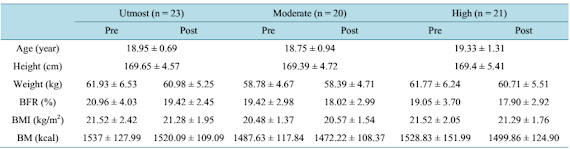 |
| Table 1: Characteristics of study groups at pre and post | Data are means XS± . Pre, pretraining; post, at the end of 8-week training; mid, at the end of 4-week training. Utmost, utmost intensity endurance training; moderate, moderate intensity endurance training; high, high intensity endurance training (Tian. 2014) |

If you have no idea what I am talking about, I suggest you take another look at my June 2012 article "Are You Still Burning Calories or Already Losing Fat? Study Shows: 5x15 Min HIIT Reduce Body Fat & Improve Fitness Twice as Effectively as 5x40min of Classic Cardio" (learn more) after youve finished this article.
- Heart rate variability (HRV): No significant changes in HRV parameters were found in all groups at pre and mid. But at post, the moderate intensity group showed more significant increases in RMSSD, PNN50, HF, LF and SDNN (P < 0.05 or 0.01) and much greater reduction in LF/HF than the other two groups (P was 0.033, 0.037 respectively). HFn of the moderate intensity group was significantly higher than that of the utmost intensity group (P = 0.012), while the opposite pattern occurred in LFn and LF/HF of the two groups (P was 0.025, 0.015 respectively).
As you would expect the changes in HRV in the moderate and utmost intensity group reflect increases in parasympathetic and sympathetic nervous system activity, respectively. - Circadian Changes in Cold Pressor Test (CPT): From pre to post marked differences were not found in SBP and DBP of all groups and their increases. At post HR was much less increased in utmost intensity group during CPT than the other two groups (average P < 0.05).
Next to a high basal heart rate an inhibited increase in heart rate is another characteristic of later stages of sympathetic overtraining. - Plasma catecholamine (NE & EPI): Norepinephrine (NE) concentration was considerably lower in utmost intensity group than the other two groups (P was 0.001, 0.00 respectively). At post marked inter-group differences were still not found in plasma PEI concentration.
A reduced catecholamine release is a classic characteristic of long(-er) term sympathetic overtraining - a phenomenon, some people may call "adrenal fatique" that occurs after an initial phase of catecholamine overproduction in sympathetic overtraining.
For the utmost intensity group, on the other hand, the scientists diagnosed an "over-excited SN [sympathetic nervous system]" (Tian. 2014), which is in contrast to the medium intensity and high intensity group, where the head-up tilt test did not indicate an "impairing effect on autonomic regulation" (Tian. 2014).
What about muscle loss? Oh, yes! I almost forgot that scientists from the University of the Witwatersrand (Oost- huyse. 2014) in South Africa have recently been able to show that 3 h of race- simulated cycling on 4 consecutive days may improve the cyclists ability to tap into their fat stores as an energy reserve. Unfortuna- tely, it will also lead to a 28-46% greater reliance on endogenous protein catabolism during exercise on day 2-4.
Bottom line: A least in the study at hand, the intense, albeit better short bouts of high intensity exercise in the HIIT-like high intensity group of the study at hand turn out to be the least overtraining prone type of aerobic activity.Now, every SuppVersity reader knows that protein catabolism doesnt necessarily translate ot "muscle loss", but for the average 10h of cardio + 20% energy deficit "dieter", it could.
Even the classic medium-intensity cardio training appears to be more overtraining-prone, due to the comparatively long duration and the subsequent increase in parasympathetic nervous system activity. If youre looking for a "side-effect free" cardio regimen, 3-5x intervals of 3x400m sprints could be a good way to incorporate cardio training into your exercise routine.
One thing we should keep in mind, though, is that someone who is sympathetically overtraining in the gym with all its negative consequences (see Figure 1) would probably be better of with classic "moderate intensity cardio" to bring up the parasympathetic tone and avoid "weight lifting induced" sympathetic dominance | Comment on Facebook!
- Myslivecek, P.R., Brown, C.A. and Wolfe, L.A. (2002) Effects of Physical Conditioning on Cardiac Autonomic Function in Healthy Middle-Aged Women. Canadian Journal of Applied Physiology, 27, 1-18.
- Oosthuyse, T., & Avidon, I. (2014). Changes in substrate utilisation and protein catabolism during multiday cycling in well-trained cyclists. Journal of Sports Sciences, (ahead-of-print), 1-11.
- Pichot, V., Busso, T., Roche, F., Garet, M., Costes, F., Duverney, D., Lacour, J.R. and Barthélémy, J.C. (2002) Autonomic Adaptations to Intensive and Overload Training Periods: A Laboratory Study. Medicine & Science in Sports & Exercise, 34, 1660-1066.
- Tian, Kaixin, et al. "Effect of Endurance Training on the Autonomic Nervous System Function of Young Male." International Journal of Clinical Medicine 5.19 (2014): 1189.
- Yamamoto, K., Miyachi, M., Saitoh, T., Yoshioka, A. and Onodera, S. (2001) Effects of Endurance Training on Resting and Post-Exercise Cardiac Autonomic Control. Medicine & Science in Sports & Exercise, 33, 1496-1502.


Wednesday, April 13, 2016
Longer Rest Periods Compromise Adaptational Response in Resistance Training Older Men in 12 Week Study
 |
| Best-agers listen up: If you want to make progress, socialize after your workouts and stick to rest periods in the 60-90s range. |
I have to admit, with a mean age of 70.3 years, the 22 male volunteers of said study dont qualify as the "classic" gymrat. On the other hand, you will probably have heard the argument that aging muscle cannot sustain the same extent of high intensity hammering thats highly productive in younger folks against.
Learn more about building muscle at www.suppversity.com

Tri- or Multi-Set Training for Body Recomp.?
Alternating Squat & Blood Pressure - Productive?
Pre-Exhaustion Exhausts Your Growth Potential
Full ROM ? Full Gains - Form Counts!
Battle the Rope to Get Ripped & Strong
Study Indicates Cut the Volume Make the Gains!
Against that background, its actually all the more surprising that the 11 men in the 60s rest period groups of this recent 4 weeks resistance training study saw significantly greater increase in lean muscle mass, bench press & leg press 1RM max, performance on the pull-down and several parameters of functional performance (not shown in Figure 1).Tri- or Multi-Set Training for Body Recomp.?
Alternating Squat & Blood Pressure - Productive?
Pre-Exhaustion Exhausts Your Growth Potential
Full ROM ? Full Gains - Form Counts!
Battle the Rope to Get Ripped & Strong
Study Indicates Cut the Volume Make the Gains!
 |
| Figure 1: Changes in body composition and strength after 8 and 12 weeks; expressed relative to the values that were measured after the 4-week pre-training phase that was identical for both groups (Villanueva. 2014) |
- Training frequency: 3 days/week for the 4-week training cycle
- Sets / reps: 2 to 4 sets with 15 to 8 repetitions (set number increased, rep number decreased over time)
- Exercise number: Four to six exercises per workout
"this strength outcome measure, because previous work from our lab has indicated there is relatively less variability among study participants with chest press 1-RM val ues, versus leg press 1-RM values, and, therefore, it would allow us to more easily randomize and create two treatment groups that are similar in (upper body maximum) strength.In the following 8-week actual study period the subjects were subjected to a progressive total-body resistance training program emphasizing development of upper and lower body strength.
- Training frequency: 3 days/week for 8 weeks by both groups (SS and SL)
- Sets / reps: sets ranged from 2 to 3, repetitions from 6 to 4
- Exercise number: 4–6 exercises
"Throughout the entire resistance training program, all sets were performed maximally for the assigned number of repetitions and with proper lifting technique, and loads were adjusted in accordance with recovery and performance, across the repeated sets progression.
 |
| At least in untrained subjects shorter rest periods (60s vs. 150s) may have more beneficial effects on body composition, i.e. they elicit greater lean mass gains and higher losses of body fat (Buresh. 2009) |
Furthermore, it is important to note that study participants were never expected to perform sets to absolute muscular failure; given an appropriate loading progression, with alterations in set/repetition schemes throughout and across microcycles (i.e., a series of 3 training sessions), the repetition maximum assignments allowed for successful completion of the assigned number of repetitions at the load(s) prescribed, across multiple sets, and with minimal need for assistance/spotting" (Villanueva. 2014.)Now this certainly sounds as if the protocol was realistic. But there is one major difference that puts a question mark behind the results of the study: usually regimen with long and short rest times differ significantly in the number of sets and the number of reps. Thus it is possible that future studies using different protocols for both groups would yield different results.
 |
| Figure 2: More helps more... at least in elderly study subjects increasing the intake of whey protein after a workout from 20g to 40g will yield significant benefits (Yang. 2012). |
Another thing that is wirth mentioning is that the subjects consumed >1.0 gram protein/kilogram body weight/day - without the addition of fast absorbing high BCAA protein sources, however, elderly men (and women) are always having a hard time to build practically relevant amounts of lean muscle.
Against that background, I would love to see this study being repeated with 30-40g of whey protein being consumed in the vicinity of the workout; and in case you want to do your own N=1 experiment using this or any other workout protocol described in the study at hand, I would suggest you make sure to add some extra-protein, as well. Previous studies do after all indicate that "more" as in 40g vs. just 15-20g helps more in men and women in their 60s or older | Comment on Facebook!
- Buresh, Robert, Kris Berg, and Jeffrey French. "The effect of resistive exercise rest interval on hormonal response, strength, and hypertrophy with training." The Journal of Strength & Conditioning Research 23.1 (2009): 62-71.
- de Salles, Belmiro Freitas, et al. "Rest interval between sets in strength training." Sports Medicine 39.9 (2009): 765-777.
- Villanueva, Matthew G., Christianne Joy Lane, and E. Todd Schroeder. "Short rest interval lengths between sets optimally enhance body composition and performance with 8 weeks of strength resistance training in older men." European journal of applied physiology (2014): 1-14.
- Willardson, Jeffrey M., and Lee N. Burkett. "The effect of different rest intervals between sets on volume components and strength gains." The Journal of Strength & Conditioning Research 22.1 (2008): 146-152.
- Yang, Yifan, et al. "Resistance exercise enhances myofibrillar protein synthesis with graded intakes of whey protein in older men." British Journal of Nutrition 108.10 (2012): 1780-1788.
Friday, April 8, 2016
Training For Gains High Intensity Low Volume Strength Gains Stick Low Intensity High Volume Gains Dont But They Come With Significant Improvements in Body Comp
 |
| Its one thing to make strength and mass gains, its a whole different story to make them last - if possible, for the rest of your life! Study suggests: Training intense, may help. |
"Effect of acute detraining following two types of resistance training on strength performance and body composition in trained athletes" - thats the title of a paper that was published late last year but popped up in the major databases, only recently. In spite of the delay, the results Vahid Tadibi and his colleagues from the Razi University, the University of Kordestan and the Islamic Azad University present in this 5-pages paper are unquestionably well worth being covered.
Dont forget to feed your muscles and learn more about protein intake at the SuppVersity

Are You Protein Wheysting?

Spread or waste your protein?

Protein requ. of athletes

High EAA intra-workout fat loss

Fast vs. slow protein

Too much ado about protein?
"determine the influences of short term detraining after two kinds of resistance training on strength performance and body composition in trained athletes." (Tadibi. 2013)To this ends, the Iranian researchers recruited 30 healthy men students recruited from
Razi University of Kermanshah. The subjects were divided into two experimental groups as follows:
- group (I) who performed resistance training with low intensity and high volume (GRI: n=15), weight 73.7±10.3 kg, height 174.5±7.5 m and age 24.7±1.4 years old and
- group (II) who performed low volume and high intensity (GRII: n=25), weight 63.2±6.2, height 175.8±5.5 and age 25.4±1 (years old).
- warm up, specific or related training and cool down.

bench press,
Figure 1: Graphical overview of the two training regimen - squat,
- biceps curls,
- triceps extensions,
- shoulder press
"[s]ubjects performed 12– 15 maximal repetitions/set (55–60% 1RM) in group I, low intensity and high volume (LIHV protocol), and 5 maximal repetitions/set (85–90% 1RM) in the group II, low volume and high intensity (HILV protocol)" (Tadibi. 2013)In order to establish optimal progression the "1RM was retested in the end of every week so that resistance could be adjusted properly" (Tadibi. 2013).
TRAINING ? DETRAINING ? RESULTS?
Apropos progress, you will probably remember that the actual intention of the researchers was not to compare the muscle and strength gains during the six-week training program, but their persistence. Accordingly, the all-important question was what would happen, when the subjects resumed their normal active, but not necessarily resistance trained lifestyle after a 2-week lay-off of any type of systematic (training stoppage).
 |
| Figure 1: Relative changes in max strength (left) and body comp (right) from pre- to post-detraining (Tadibi. 2013) |
- Contrary to what common wisdom would predict, the low intensity, high volume (LIHV) and the high intensity, low volume (HILV) regimen produce statistically identical strength gains over the course of the six-weeks training phased (not shown in Figure 1)
- The gains on the high intensity, low volume (HILV) regimen were - albeit not significantly - but visibly more persistent than those that were brought about by the high volume low intensity regimen.
- The high volume training turned out to have significant fat burning effects of the initially significant relative reduction in body fat % of 18% (from 12.15% to 9.73 in LIHV vs. 11.91% to 10.59% in the HILV group), there were yet only 7% left after 2 weeks of detraining (the BF% went back up from 9.73±3.12% to 11.27±3.37%).
In the end the study at hand confirms the usefulness of periodization! At first it may seem as if the lasting effects of the high intensity, low volume training would suggest that this is the way to train. We must not forget, though that both "regular hypertrophy" as in protein synthesis and the architectual changes the muscle undergoes are two sided of the same coin. The goal should thus always be to have both come into their own.
Lets go beyond the results and get to the underlying mechanisms and practical implications: In the absence of corresponding data, its obviously difficult to tell, whether the following hypothesis is accurate. Based on the research I have done for the Intermittent Thoughts on Building Muscle (read the article series), I would yet speculate that the persistence of the gains in the high intensity, low volume group reflects a difference in structural (muscle + nerves) vs. non-structural adaptations.Dont forget, you can learn more about periodization, here at the SuppVersity.
The latter has been observed previously with increased satellite cell recruitement, IFG-1 + MGF activity and corresponding changes in the structural architecture of the muscle (improved firing of motor units, incorporation of new satellite cells...) in response to high or even super-maximal intensity training & eccentrics and would speak in favor of "structural gains" vs. the mere "ballooning up" in response to the protein synthetic response of high volume strength training.
On the other hand, we all want the muscle to show, right? And if you look at the reduction in BF% after the 2 weeks of detraining its hard to argue in favor of high intensity training, when it comes to fat loss.
- Häkkinen, K. "Neuromuscular adaptation during strength training, aging, detraining, and immobilization." Critical Reviews in Physical and Rehabilitation Medicine 6 (1994): 161-161.
- Tadibi, Vahid, et al. "Effect of acute detraining following two types of resistance training on strength performance and body composition in trained athletes." (2013).
Bigger Triceps in 8 Weeks of Reduced Oxygen Training Bigger as in Bigger Than With Regular 10 RM Training
 |
| Please, do me a favor and read the info in the red box. Hypoxia ? Kaatsu |
Against that background I can live with the minor downside that the subjects were 13 healthy men (mean age, 23 years; height 169 cm; body mass 60 kg) who were assigned to train either under normoxic or hypoxic training conditions were a little "too average" (=untrained) for my liking.
You can learn more about Hypoxia at the SuppVersity

EPO Effect of Low Oxygen

-11% Fat in Three Weeks!

Training & Living in Hyopoxia

Strength Up, Size Down W/ Kaatsu

Hypoxia vs. Occlusion

Blood Flow Restriction Update
Just to make sure you dont over-read this: Hypoxia in this case means "low oxygen supply" - This is in contrast to blood flow restriction training of which I suspect that some of you may have (until now) thought was applied in this study.
As the data in Figure 1 goes to show you, neither (a) nor (b) nor both was the case in the study at hand. The Elbow extensions the subjects performed at a workload of a 10 RM with the non dominant arm to exhaustion three times with 1-minute intervals 3 days each week for 8 weeks, did after all elicit significant strength and size gains in both groups - regardless of whether they were performed while the subjects were inspiring normoxic air (FiO2=20. 9%; at sea level) or hypoxic gas (FiO2=12 .7%; corresponding to 4000 m above sea level): |
| Figure 1: Thickness of triceps brachii (a and b) in both arms before and after training in the normoxic (N) and hypoxic (H) groups; ** denotes significant difference (Kurobe. 2014) |
The inter-group differences, i.e. the significantly greater increase in muscle thickness the hypoxia group, was significant, as well. And while the latter cannot be said of the increase in strength, I am pretty sure that the additional size gains alone would be reason enough for some of you to take a bottle with reduced oxygen air (Fi=2=12.7%; meaning only 12.7% of the air in the container would be oxygen to the gym).
 |
| As I already pointed out in the red box, this post is not about blood flow restriction (aka Kaatsu) its not about wearing a simple mask that hinders your breathing (see right), but its about wearing a mask with exogenous air supply - low oxygen air, obviously. |
In view of the non-existent effects on strength, its also not exactly an option for regular performance oriented athletes.
For a bodybuilder, on the other hand, it may in fact be worth trying. After years of training, its yet not realistic to see similar pronounced gains as a rookie, though - so dont be disappointed if the cycle you did last summer had more pronounced effects boys ;-)
- Kurobe et al. "Effects of resistance training under hypoxic conditions on muscle hypertrophy and strength." Clin Physiol Funct Imaging(2014) doi: 10.1111/cpf.12147
Monday, April 4, 2016
Alternate vs Classic Resistance Training Can You Bench in Between Your Squat Sets Still Make Fabulous Gains
 |
| What now? Wait 3 minutes or off to the bench for an alternate set of bench presses or pulls ? |
The above is how Anthony B. Ciccone, Lee E. Brown, Jared W. Coburn, Andrew J. Galpin kick off their latest paper in the venerable Journal of Strength and Conditioning Research (Publish Ahead of Print).
Squatting will always remain the most versatile muscle builder & fat shredder

Optimizing Rest for Size and Strength Gains
When Rodents Squat, We Can Learn A Lot!
Farmers Walk or Squat? Is Strong- men T. For You?
Full ROM ? Full Gains - Form Counts!
Battle the Rope to Get Ripped & Strong
Up Your Squat by 25% With Sodium Bicarbonate
The purpose of the corresponding study was to compare the effects of traditional to those of alternating whole body strength training on squat performance. To this ends, Ciccone et al. recruites 20 youn men, who had to perform two workouts:Optimizing Rest for Size and Strength Gains
When Rodents Squat, We Can Learn A Lot!
Farmers Walk or Squat? Is Strong- men T. For You?
Full ROM ? Full Gains - Form Counts!
Battle the Rope to Get Ripped & Strong
Up Your Squat by 25% With Sodium Bicarbonate
- The traditional set workout (TS) consisted of four sets of squats at 80% of 1RM on a force plate with 3-minutes rest between sets.
- The alternating set workout (AS) also consisted of four sets of squats at 80% of 1RM but with bench press, and bench pull exercises performed between squat sets 1, 2 & 3 with between-exercise rest of 50 seconds, resulting in approximately 3-minutes rest between squat sets.
 |
| Figure 1: Maximal # of reps on last set and average power in the classic vs. alternating condition (Ciccone. 2014) |
- Individuals who aim to optimize squat AP should refrain from performing more than three AS sets per exercise.
- Those who aim to maximize squat repetitions to failure should refrain from performing upper body multi-joint exercises during squat rest intervals.
Bottom line: The number of trainees I know whose interest in (1) average power and (2) maximal repetitions to failure exceeds their drive to improve their physiques is... well, lets say its not exactly high. In view of the fact that the study at hand does not provide any relevant information about a potential decrement in muscle gains due to alternate training and considering the fact that I dont need a study to tell you that the shorter rest times in-between sets and the incorporation of bench press and bench pull is going to help you shed that belly of yours, the majority of trainees, I know will still be better off training according to AS, i.e. with alternate exercises in-between the sets and 50s instead of 3 minutes rest between sets.
Ah, I almost forget, four of the subjects actually increased the number of reps they performed in the alternate condition - and the standard deviation for the average power is larger than the difference between the two conditions. If you still insist that 3-min of rest are necessary you may be interested to hear that shorter rest periods are (a) consistently associated with increased GH release (de Salles. 2009) and (b) previous studies comparing short (2 min) vs. long (5 min) rest times have shown increased size gains (Figure 2) even in a non-alternating scenario (Ahtianen. 2005) - the conclusion that longer rest times lead to higher gains, cause you can lift more weight / do more reps is thus obviously unwarranted.
References: |
| Figure 2: Changes in right leg 1RM during the experimental 6-month strength-training period in both groups and the relative changes after the short rest (SR) and long rest (LR) training periods (Ahtianen. 2005). |
- Ahtianen, Juha P., et al. "Short vs. long rest period between the sets in hypertrophic resistance training: influence on muscle strength, size, and hormonal adaptations in trained men." The Journal of Strength & Conditioning Research 19.3 (2005): 572-582.
- Ciccone AB, et al. "Effects of Traditional Versus Alternating Whole-body Strength Training on Squat Performance." J Strength Cond Res. (2014) Jun 17. Ahead of print.
- de Salles, Belmiro Freitas, et al. "Rest interval between sets in strength training." Sports Medicine 39.9 (2009): 765-777.
Subscribe to:
Posts (Atom)
